Bagpipes and Kaffiyas: Palestine

Palestinian bandsmen play in front of the Church of the Nativity in Bethlehem in the West Bank on the day most Christians celebrate Christmas Eve. (Photo: Kevin Frayer/AP)
Source: BBC
Palestinian bandsmen play in front of the Church of the Nativity in Bethlehem in the West Bank on the day most Christians celebrate Christmas Eve. (Photo: Kevin Frayer/AP)
Source: BBC
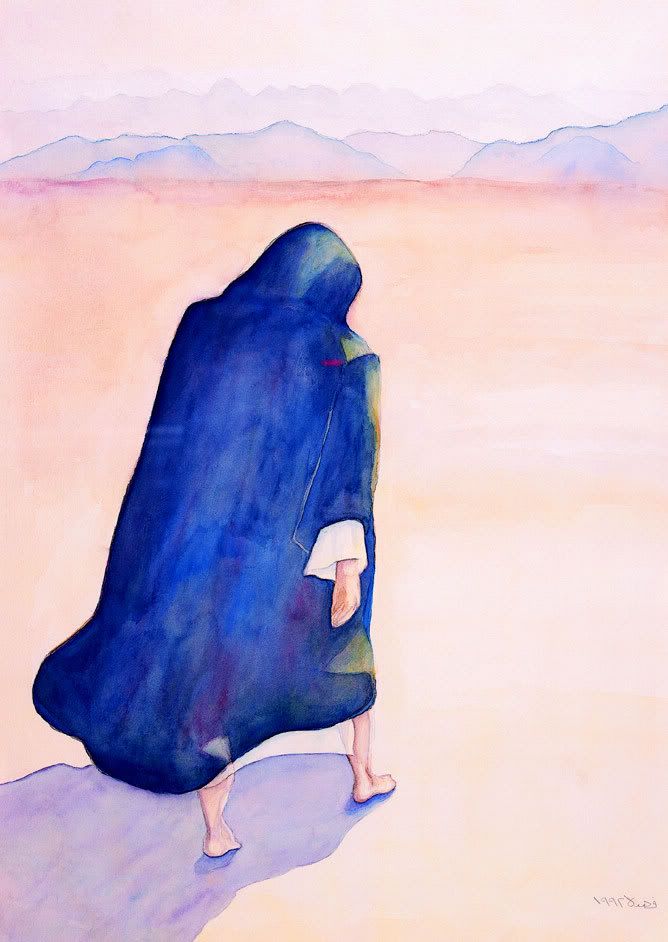
Fahda Bint Saud. (Saudi Arabia, 1953). Woman-1. (1992). Watercolor on paper. (86 X 64 cm).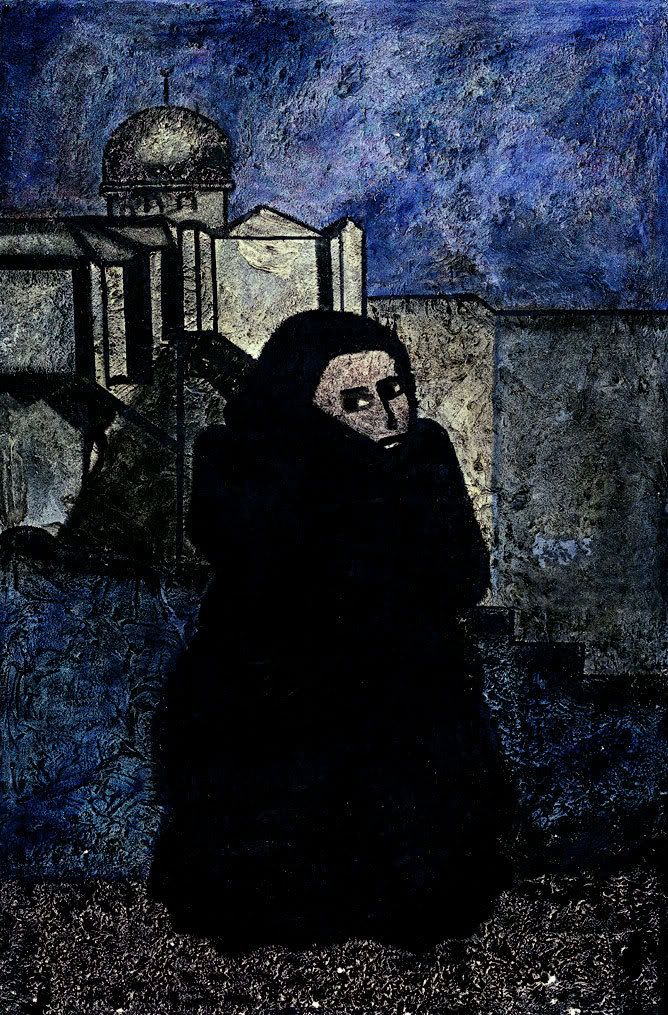
Mounira Nusseibeh. (Palestine, 1943). Kneeling in Front of the Mosque. (1983). Mixed media on canvas. (151 X 100 cm)
http://www.artreachfoundation.org/veils/
 Labels:
art,
Fahda Bint Saud,
Mounira Nusseibeh,
Palestine,
Saudi Arabia,
women
Labels:
art,
Fahda Bint Saud,
Mounira Nusseibeh,
Palestine,
Saudi Arabia,
women
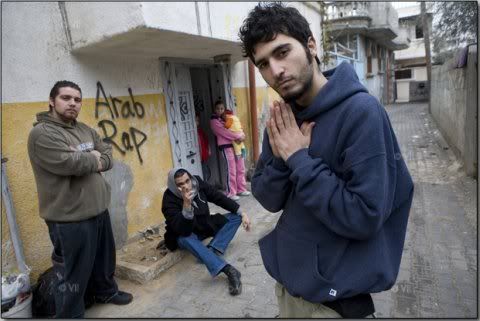 PR's lyrics are full of death (by falling bombs, Israeli Mossad agents or feuding Palestinian gangs) and set to an ominous, rumbling beat that sounds like an approaching Israeli tank. "Traditionally, Palestinian songs are all about love," says one member, Mohammed al Farra, whose rap handle is D.R., the Dynamic Rapper, "but our reality in Gaza is about suffering. Gaza is like a big prison, and we get our message across with rap music." At concerts, PR ignites a dervish-like frenzy among Palestinian teenagers. When they sing, "Just because we're Palestinians/ America and everyone suspects us of being terrorists/ But all we're asking for is freedom," the crowd erupts with the same raw energy you see in the Gaza showdowns between Palestinian and Israeli forces.
The Hunger
Sources: Time, VII Photo Agency
“It’s Not a Gun” chronicles the establishment of a music association for the children of Palestine.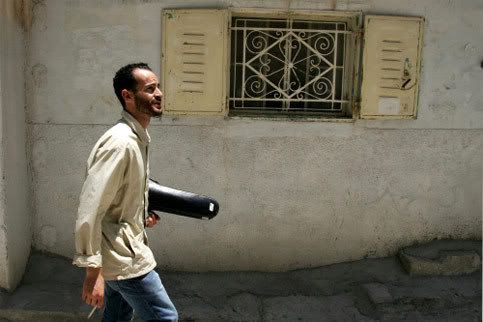
Violinist Ramzi Aburedwan walks through a Palestinian refugee camp. His music association, Al Kamandjati, introduces Palestinian children to the art of live music. What does it mean for people to have music while living under military occupation? (Photo courtesy of CPFF).
It’s Not a Gun chronicles the triumphs and travails of al-Kamandjâti (the violinist), a summer music school in Ramallah for Palestinian children. Soaring spirits prevail through the film’s plentiful music, while the school’s founder, violinist Ramzi Aburedwan, and his multi-national cohorts face daily problems ranging from obstruction at checkpoints to efforts by vigilante religious extremists to shut them down.
Read more: Electronic Intifada Ramallah Online
Labels:
documentary,
movie,
Music,
Palestine,
Ramzi Aburedwan
 SlingShot Hip Hop is a documentary film that focuses on the daily life of Palestinian rappers living in Gaza, the West Bank and inside Israel. It aims to spotlight alternative voices of resistance within the Palestinian struggle and explore the role their music plays within their social, political and personal lives. Coming Soon.
Labels:
hip hop,
Music,
Palestine,
rap,
Slingshot Hip Hop
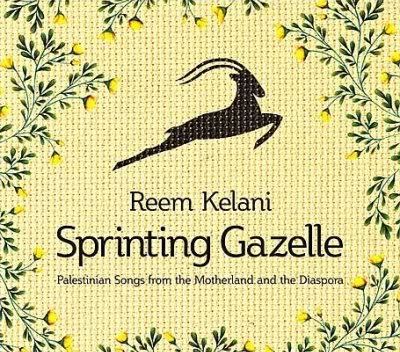
As Nazarene Women Crossed the Meadow(Qata'en an-Nasraawiyyaat)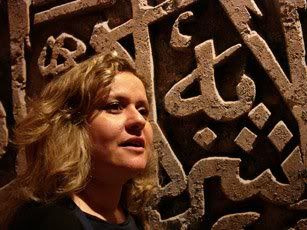 Reem Kelani is a Diaspora Palestinian singer, musician and broadcaster. She was born in Manchester, raised in Kuwait and is now based in London. Her father comes from Ya’bad near Jenin in the West Bank and her mother from Nazareth in Galilee.
In her music, Kelani does not separate the personal from the collective, or the sacred from the secular. Songs of love, harvest, weddings and separation mix freely with songs of praise and meditation. She views her musical journey as both historical and political, personal and collective. She seeks to point out suffering and to highlight celebration. Her journey is a musical one through the written and oral history of a people who are proud of their collective sense of poetry, stories, music and existence.
Mawwaal (Variations on Loss)
[Mahmoud Darwish]
Labels:
Music,
Palestine,
Reem Kelani
The Horseman, by Ghassan Kanafani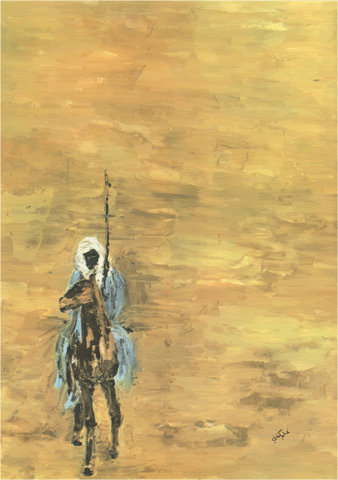 Accompanied by a 17-year-old niece, Palestinian Guerrilla Leader Ghassan Kanafani, 36, walked out of his apartment in a Beirut suburb, sat down at the wheel of his Austin 1100 and turned on the ignition. The car disintegrated in a horrendous explosion that killed the occupants and shook the neighborhood. Ten pounds of plastique had been stuffed under the right front fender; a hand grenade that served as detonator was wired to the ignition. Acre-born Novelist Kanafani (Men in the Sun, That Which Remains for You), an exile from his homeland since 1948, was an ideologist and spokesman for the Marxist Popular Front for the Liberation of Palestine. (Time, 24 July 1972)
It was reported at the time 'that a piece of paper had been found at the site bearing the Israeli emblem of a candlestick and the sentence in English: "With the compliments of the Israeli Embassy in Copenhagen."(The Times, 10 July 1972, p. 5)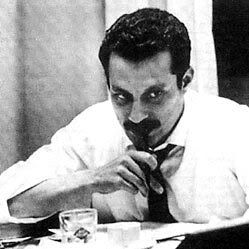
Three collections of Kanafani's literary works are available in English:
Men in the Sun and Other Palestinian Stories
Palestine's Children: Returning to Haifa and Other Short Stories
All That's Left to You: A Novella and Other Short Stories
Kanafani's work The 1936-39 Revolt in Palestine, along with more about the author, is available online.
Labels:
Arab Revolt 1936-39,
art,
Ghassan Kanafani,
literature,
Palestine,
PFLP
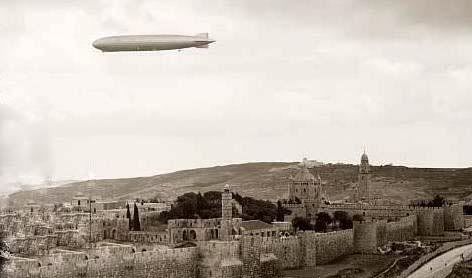
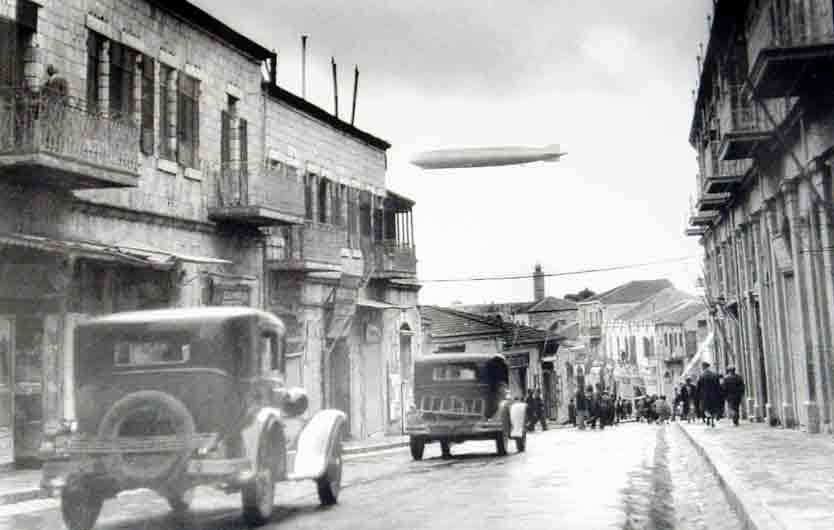
Both these pictures were, I believe, taken by the Armenian photographer Elia Kahvedjian.
Labels:
Aviation,
Elia Kahvedjian,
Graf Zeppelin,
Jerusalem,
Palestine
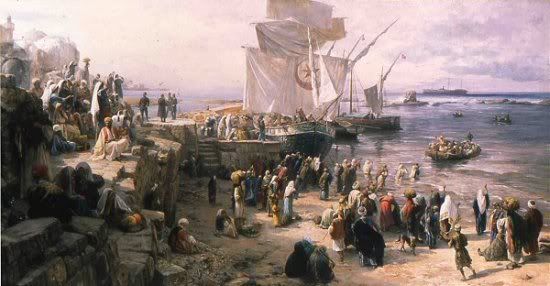
This painting, which addresses issues of class and religion in the late Ottoman Empire, is the masterwork of this German artist who devoted himself to Orientalist themes. Bauernfeind began his first journey to the Middle East in 1880, after learning about the region from his brother-in-law, a missionary in Beirut. Two more extensive trips in the 1880s took him through Egypt, Syria, and Palestine. In 1898 he settled in Jerusalem, where he lived until his death. From the time of his first visit, Bauernfeind was captivated by Jaffa, and in an 1885 letter to his sister he described several aspects included in this painting: "[. . .] what I saw here during the departure of the military conscripts, with the women chasing after them in dinghies far out into the sea, and holding up their infants so that they often could be rescued only at extreme peril; or the scene in the streets where aged fathers wanted to embrace their sons for the last time, and were beaten off with cudgels by the rough soldiery—would also furnish material for some interesting pictures."http://www.daheshmuseum.org
These actual events witnessed, inspired the present picture, a panoramic scene that extends from the closely observed crumbling seawall at left to the ocean vista on the right, anchored in the middle by a trading ship whose sail is emblazoned with the Islamic crescent. By the late 19th century, the Ottoman army had been reorganized along European lines into a professional corps manned by volunteers and conscripts. On the seawall, Ottoman officers in modern uniform meet with a man, perhaps the provincial bureaucrat in charge of Jaffa's conscription.
Labels:
art,
Germany,
Gustav Bauernfeind,
Jaffa,
Orientalism,
Ottoman Empire,
Palestine

Excellent virtual exhibition on...
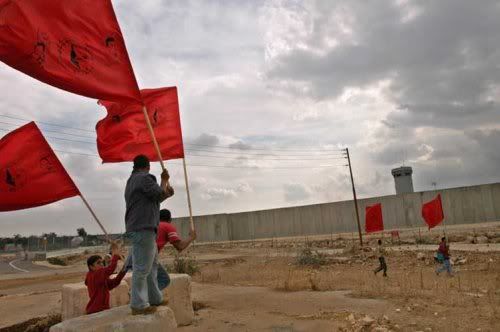
Waving PLFP ("Popular Liberation Front of Palestine") flags, Palestinian youth demonstrate against the separation walls in the West Bank city of Qalqiliya. The demonstration takes place on the international day commemorating the fall of the Berlin Wall. Photo: Ahikam Seri, 2003.
Labels:
israel,
Palestine,
The Divide,
Virtual Exhibition,
Wall
The Wall![Ismail Shammout [Palestine]: The Wall](http://farm1.static.flickr.com/214/511424618_b008b266d0_o.jpg)
Under Occupation![Ismail Shammout [Palestine]: Under Occupation](http://farm1.static.flickr.com/217/511425914_afe47949ed_o.jpg)
http://www.shammout.com
Labels:
art,
Ismail Shammout,
Palestine
Labels:
art,
Laila Shawa,
Palestine
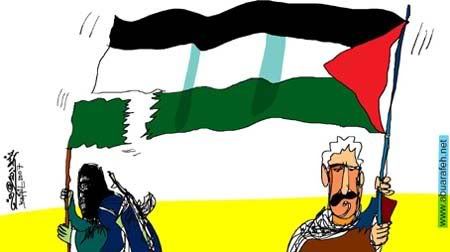
On right: "Nakba of 1948." On left: "Nakba of 2007."
Above and underneath rifle on left: "[Security] Anarchy" and "Internal Fighting."
Source: Al-Hayat Al-Jadida, Palestinian Authority, May 15, 2007